

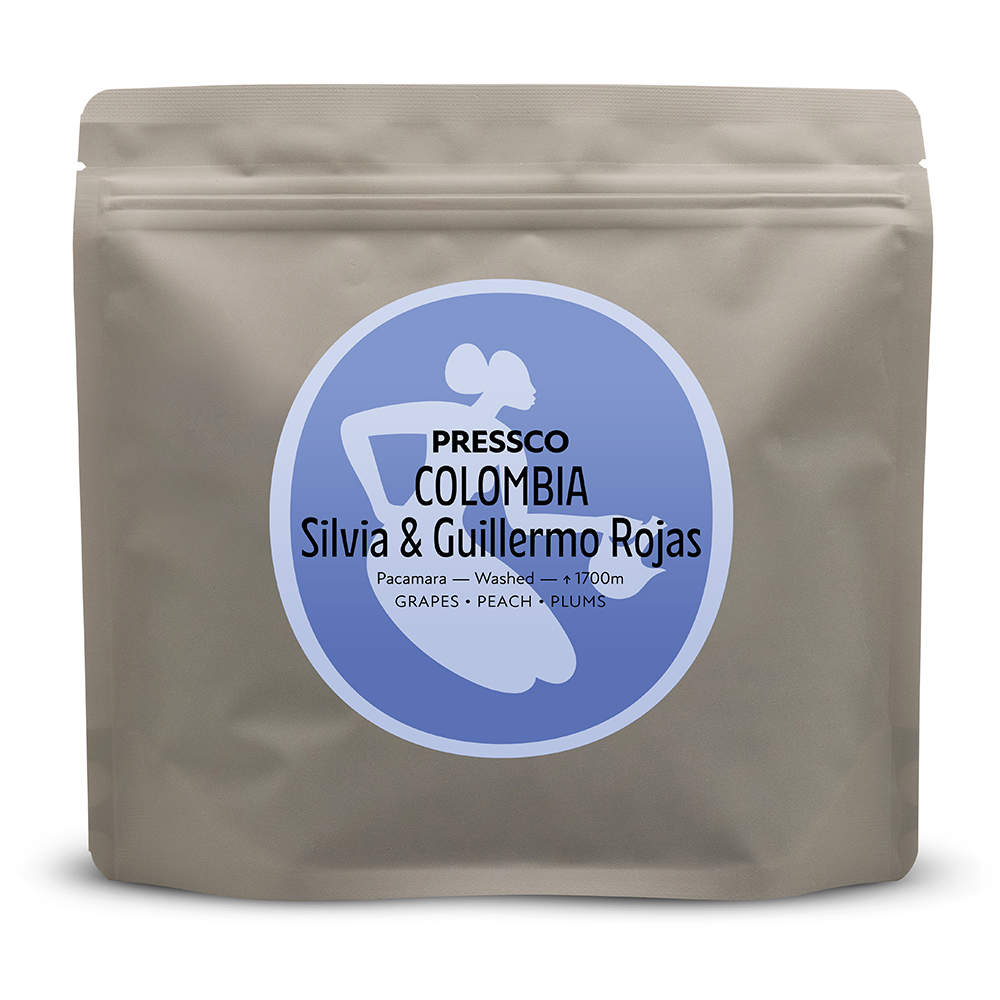


Since finding a higher paying market the couple has been experimenting with fermentation, while keeping the traditional washed processing method. Minga brings support through cupping and sensory feedback. So far the process leading to the cleanest, sweet and fruity profile is to oxidate cherries for 36 hours before depulping, and then ferment the depulped seeds in a closed bag for another 36 hours. This differs from the 24h fermentation in open tank they used to do for all their coffees.
Five years ago, while planning to plant more trees, Silvia found out her brother-in-law had some pacamara seeds lying around, a gift from a neighbor that had been left unattended. Curious to try them out, they started a nursery and then planted them on the highest part of the farm at 1650 masl. Five years later, the trees are fully grown, and the couple has discovered the cup quality of this varietal. But they’ve also realized they planted them too close together – at the same density as a Castillo – and that this varietal needs more space to grow properly. It is today very difficult to walk around the plot, let alone pick cherries or apply fertilizers. They’ve now decided to selectively remove some trees to give the others more space. This is a major shift in the farm’s design, but the goal is to boost both productivity and quality – even with fewer trees – by improving light exposure and airflow for the ones that remain.
In 2021, as Covid forced everyone into isolation, Silvia and Guillermo recognized the importance of growing their own food. They began diversifying their crops and now harvest mango, guanabana, pitaya, papaya, tapioca, and more, both for their own consumption and for extra income. As part of farm management, they maintain vegetative ground cover between the coffee trees to capture and store water, prevent soil and nutrient erosion, and enhance the soil’s biological life.





Reviews
There are no reviews yet.